Contact us
Back in 2015, the waste management company Knittel GmbH, based in Vöhringen, decided to invest in a VACUDEST vacuum distillation system (model XL 10,500) to treat its oil-containing wastewater and emulsions in a sustainable and efficient manner.
With this move, the family-run company—which has specialized in waste disposal and recycling for decades—laid the foundation for future-oriented and environmentally sound water treatment.
In 2024, Knittel took another decisive step toward resource efficiency and expanded its existing treatment plant with the latest technology from H2O GmbH—a VACUDEST ZLD.
The goal of this expansion was to further reduce the remaining concentrate volume, use energy even more efficiently, and simultaneously increase the overall cost-effectiveness of the entire system in a sustainable manner.
Knittel, headquartered in Vöhringen, is a long-established family-owned business that has specialized in waste disposal and recycling since 1953. Knittel has a history dating back more than 150 years and employs approximately 100 people.
"The biggest advantage of the ZLD is its energy efficiency. But it is also user-friendly, since the control system is very similar to that of the VACUDEST. In addition, the maintenance and labor required are very low, at around 2 hours per week."
A VACUDEST XL 10.500 is used to treat the oily wastewater and emulsions generated by commercial operations. Thanks to the integrated Clearcat module, the high-quality distillate can be discharged into the sewer system. This leaves behind a concentrate volume of approximately 1,000 m³ per year.
In the past, a post-concentrator from another supplier had already been installed to reduce this volume and recover valuable materials for recycling. However, it quickly became clear that the system was uneconomical due to high maintenance requirements, frequent faults in the refrigeration circuit, and high energy consumption of around 1,000 to 1,100 kWh/m³. The system was therefore shut down.
In July 2023, Knittel GmbH officially ordered the post-concentrator from H2O GmbH, the VACUDEST ZLD, which was successfully commissioned just six months later.
Thanks to many years of experience and a continuous product improvement process, the current generation of the ZLD series represents the latest state of the art.
The biggest advantage of the VACUDEST ZLD over conventional post-concentrators clearly lies in its cost-efficient operation. Since it is powered by the surplus steam from the VACUDEST, the specific energy requirement is around 80 kWh/m³ of treated feed. This corresponds to a reduction in specific energy demand of around 88% compared to the previous system.
Jürgen Rothmund, Head of Environmental Consulting at Knittel, reports: “The biggest advantage of the ZLD is its energy efficiency. But it is also user-friendly, since the control system is very similar to that of the VACUDEST. In addition, the maintenance and labor required are very low, at around 2 hours per week.” The fully automatic cleaning of the ZLD is carried out using the existing cleaning unit of the VACUDEST.
With the ZLD, around 400 m³ of VACUDEST concentrate with a water content of 75 to 55% is currently brought down to a water content of 30 to 35% each year. On average, this corresponds to an additional concentration factor of 2 (a further concentration increase of 32.5%). This helps reduce the cost of concentrate disposal.
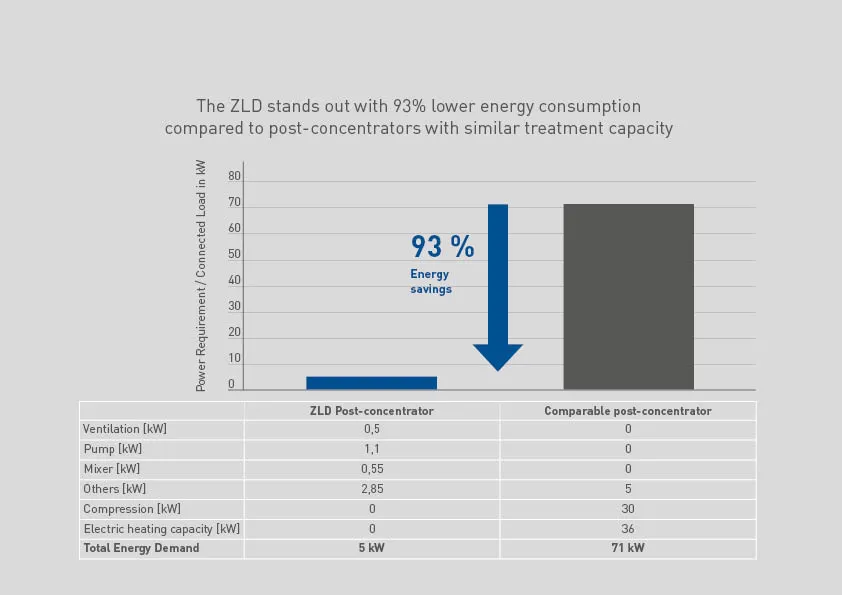
The project at Knittel impressively demonstrates the progress being made in wastewater treatment through the use of the ZLD. It shows a significant reduction in energy consumption and absolutely reliable operation of the ZLD compared to similar post-concentrators. Technological innovations make it possible to achieve both economic and ecological benefits. The successful adaptation to complex wastewater confirms the performance and flexibility of the new system and underlines H2O’s commitment to tailor-made solutions and environmental protection.
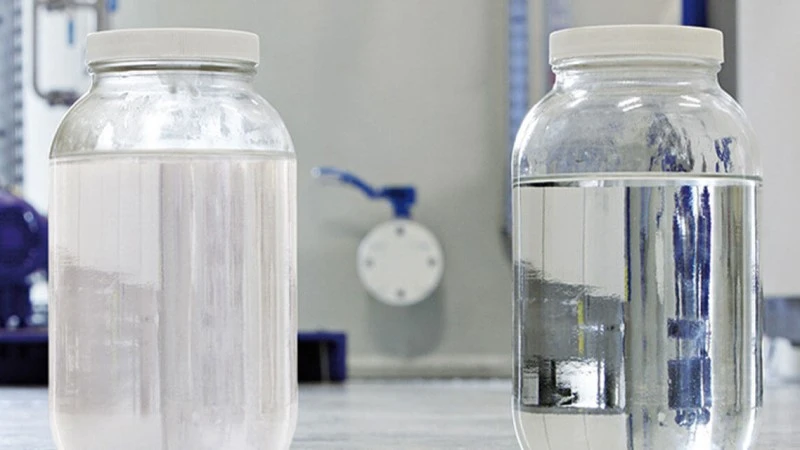
Where other processes with a lot of equipment and operating costs barely meet the legal discharge limits, the Clearcat condensation stage impresses with the quality of the treated wastewater.
It is crystal clear and practically oil-free.
Vacuum distillation plants work on the simple principle of separating substances according to boiling point differences: The industrial wastewater is evaporated under a reduced pressure at a temperature of only about 80 degrees, instead of 100 degrees as at atmospheric pressure. All substances that have a higher boiling point than water remain in the evaporation residue. This includes heavy metals, salts, but also oils, fats or surfactants.
Because the water content is evaporated, the volume of the residue from distillation is reduced to 0.5 to 5 per cent of the original wastewater volume. The rising steam, also called vapor, is almost free of impurities. After condensation, it can be returned to the production as clean process water.
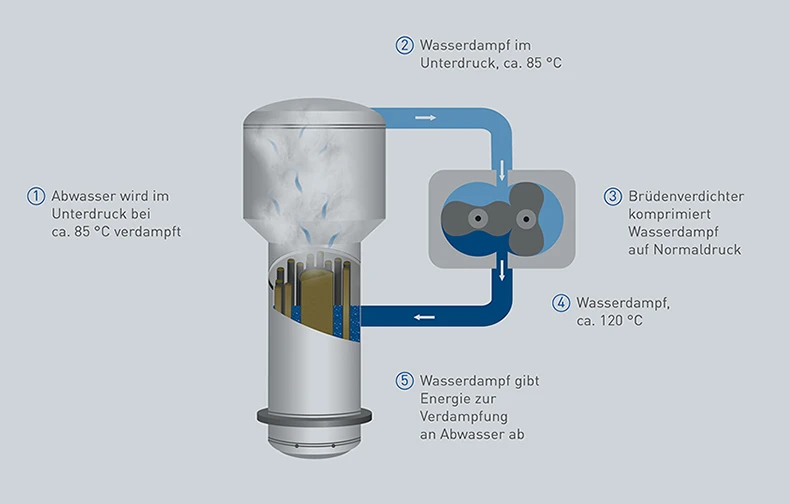
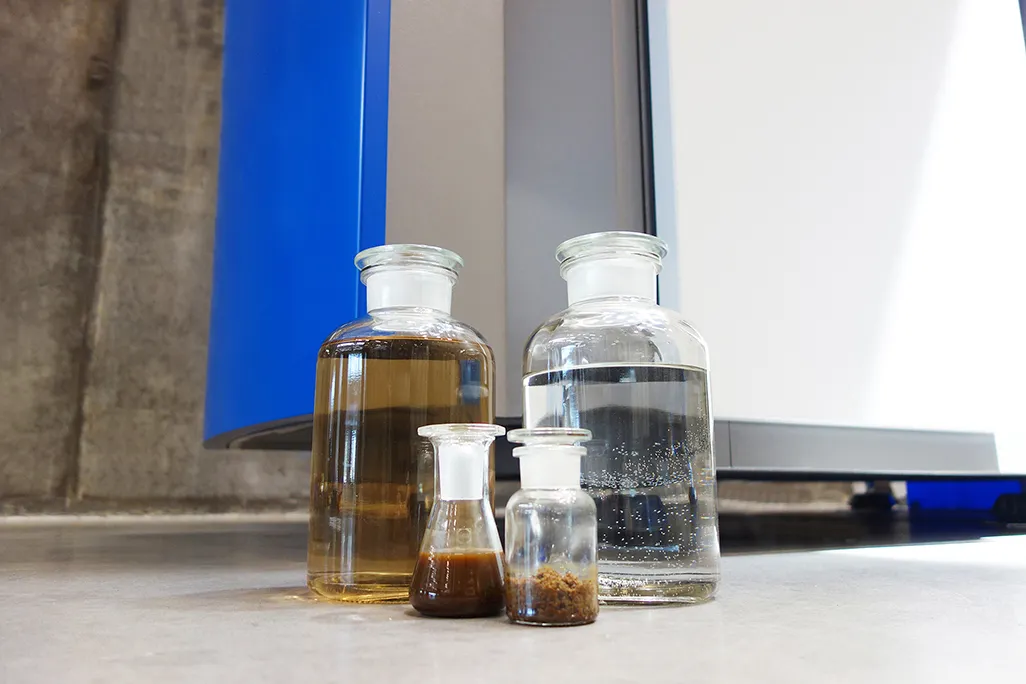
Through efficient energy recycling, high-quality energy is utilized in a second downstream evaporation stage to reduce the residual water content to as low as 20%.

You want to be part of our team and create the wastewater-free future with us?
We will tell you how!
Your contact is:
Bettina Böhringer
Human Resources
+49 7627 9239-201
career@h2o-de.com
You have questions on our VACUDEST systems?
Kindly contact us!
Your contact is:
Thomas Dotterweich
Senior Sales Engineer
+49 7627 9239-306
thomasm.dotterweich@h2o-de.com
You need consumables, spare parts or a maintenance date?
We will be pleased to assist you!
Your contact is:
Carles Fité
Technical Customer Support
+49 7627 9239-888
carles.fite@h2o-de.com


 DE
DE  EN
EN  US
US  ES
ES  FR
FR  PL
PL