
Contact us
The new industrial wastewater treatment system, based on vacuum evaporation, enables water recycling in production and supports the company’s path toward zero liquid discharge.
For years, Sonopol has been considering how to modernise the plant’s existing water and wastewater treatment system. With growing environmental pressure and repeated droughts, water has become a key issue for the long-term viability of businesses. The idea of recycling treated water back into the production line gradually gained ground, and Sonopol decided to take the step, placing its trust in H2O by installing a VACUDEST evaporator-concentrator to replace the physico-chemical treatment plant.
Let us take a step back to understand Sonopol’s decision.
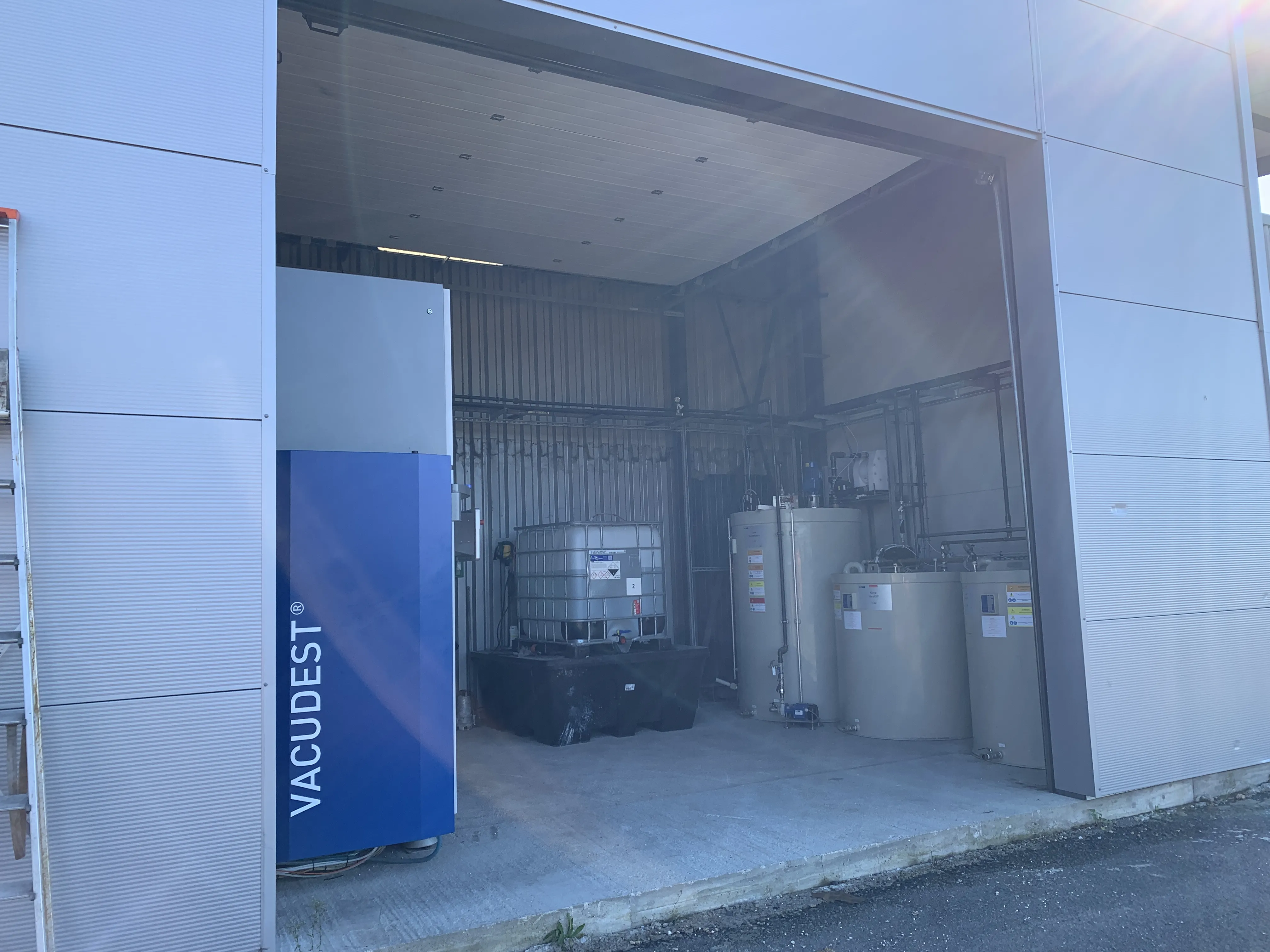
Sonopol wanted to use the reintegration of part of the group’s activity into the Vendôme site as an opportunity to upgrade its wastewater treatment facility. Dismantling the existing plant will free up space, making it possible to install production equipment. The future evaporation plant, which is much more compact, will be installed in a small building adjoining the factory.
Sonopol, based in Vendôme, has been providing various coating services for steel and aluminium for more than 50 years. The different parts arrive untreated and leave the plant with a suitable coating after undergoing anticorrosion treatment.
Powder coating of carbon steel parts requires either chemical or mechanical surface treatment. Sonopol chose the second option, using shot blasting. For aluminium parts, however, chemical treatment is essential. There are three stages before coating: pickling, degreasing and conversion.
The various rinse waters generated during these stages, together with the regeneration eluates from the ion exchange resins, are combined and sent to the physico-chemical treatment plant, where they are processed in batches. The active baths are added as well.
The effluents generated by these processes—up to 10 m³ per day—were previously treated by a physico-chemical plant requiring significant human involvement, especially to dose the various reagents according to the load of the incoming effluent. This technology was effective and appropriate at the time it was acquired, but is now outdated because of the reagents required for its operation and the amount of time needed to run it.
Sonopol wanted to equip itself to treat its effluents on site, with the following requirements:
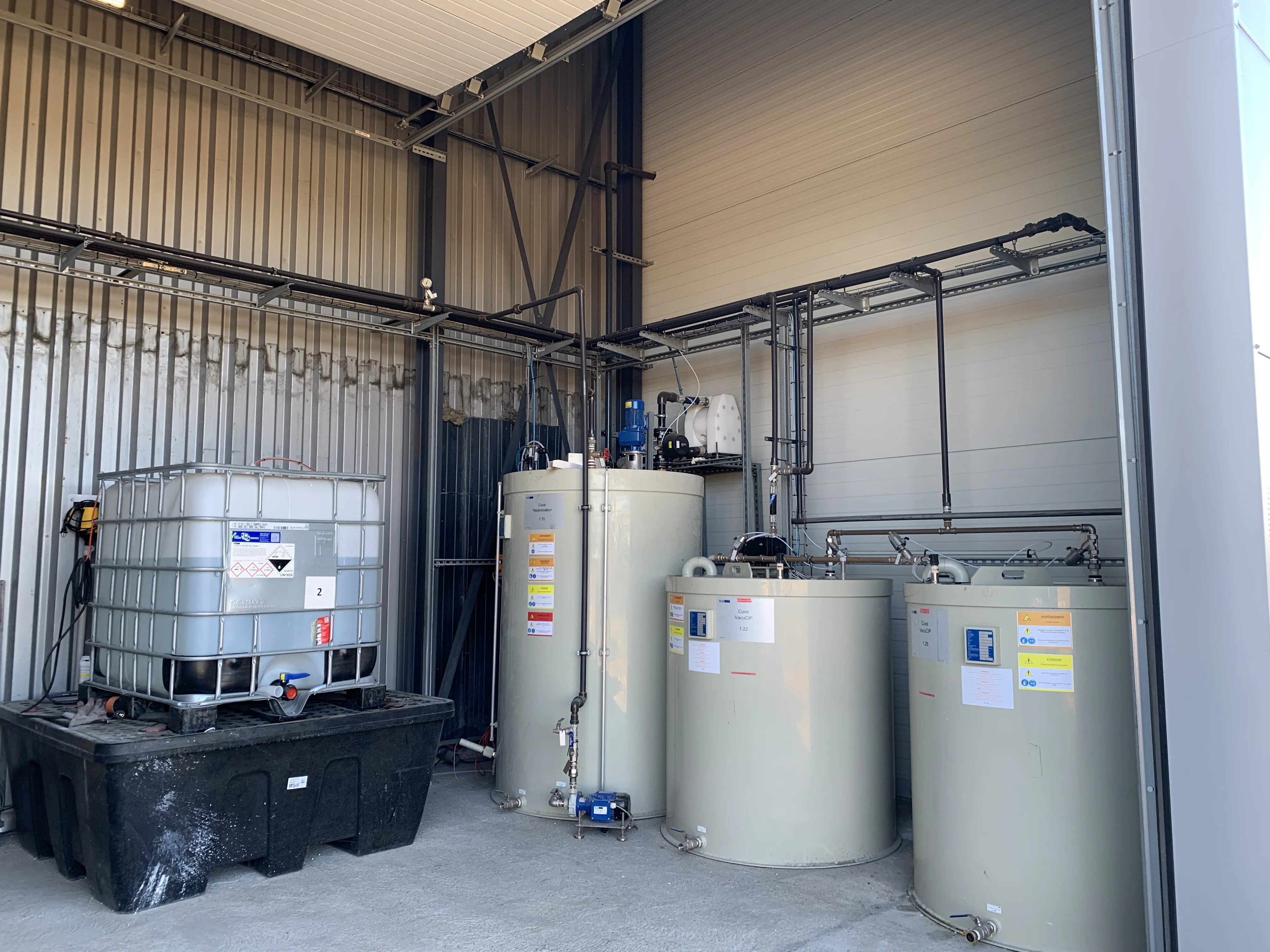
As a first step, the H2O GmbH laboratory prepared a complete balance of the effluent flows and corresponding volumes. This assessment also included a list of the products used, such as acids and bases. This part is crucial because it makes it possible to identify any products or flows that may be critical. As the planned wastewater treatment solution is based on vacuum evaporation, it is necessary to check in advance whether the substances contained in the effluents are suitable for evaporation concentration. In this case, all products used in the process are suitable for evaporation concentration technology. The low chloride and fluoride content of the effluent—both corrosive compounds—makes it possible to retain standard stainless steel. Otherwise, more corrosion-resistant steel grades can be planned. A storage tank for the effluent and a neutralisation tank for pH adjustment prior to treatment are required, since the evaporator cannot accept acidic effluent. Two distillate storage tanks with booster pump systems, as well as two 1,000-litre IBCs for the concentrate, are also planned. To house the new plant, a building adjoining the factory will be constructed while the evaporator and its tanks are being manufactured.
Once the basis of the new effluent treatment solution had been established, the customer’s specific requirements were examined again in detail:
The latest generation of VACUDEST vacuum evaporators is equipped with the modern Vacutouch control system, which also offers the possibility of remote maintenance by our after-sales service team. The evaporator screen can be displayed on any computer in the factory or on a smartphone.
New services are also available, such as Smart Service. This predictive maintenance improves machine availability and ensures a reliable, productive plant.
Sonopol wants to take advantage of the year-end shutdown to replace the treatment plant. Delivery of the different components is therefore scheduled accordingly. The new Vacudest L 3,000 ClearCat evaporator will be installed in a building adjoining the factory. The space thus freed up will allow the installation of an oven and a blasting machine.
The VACUDEST L 3000 ClearCat vacuum evaporator can treat up to 10 m³ per day, with a concentration factor of at least 20 or a maximum concentrate content of 5 percent. This concentrate, stored in 1,000-litre IBCs, will be collected by a waste disposal company. The distillate must be recycled back to the rinsing stages of the surface treatment line.
At present, the resins are heavily used because they play an active treatment role. The final rinse after conversion passes through the ion exchange resins and therefore saturates them quickly. The evaporator will take over this function, leaving the resins to serve only as a finishing step for the distillate. Regeneration cycles will then be much less frequent.
The major advantage of zero liquid discharge lies in reusing the treated water. This clean water, the distillate, is stored and fed back into production because of its excellent quality. Its conductivity is only a few µS/cm. This is due not only to the evaporation process itself but also to H2O GmbH’s specific technological developments, such as ClearCat, which produces a distillate that is almost free of oil. Mains water is used only as a small top-up because complete recycling does not exist. Considerable water savings are therefore expected.
This gives Sonopol a modern solution for water recovery and industrial water recycling. The treated distillate is returned to the rinsing stages of the surface treatment line, while only a small proportion of concentrate has to be disposed of externally. Sonopol therefore significantly reduces its fresh water demand and moves closer to liquid-free production in the sense of zero liquid discharge.
Once the order has been placed, the project is supervised by an H2O project manager who ensures that operations run smoothly before delivery: precise equipment layout, interfaces with the surface treatment line and overall supervision if necessary.
After a few months of operation, Sonopol owner and managing director Jean-Christophe Magniez explains: “Because the distillate is fully demineralised, our ion exchange resins are used much less and we carry out regeneration far less frequently. In addition, H2O optimised the concentration factor by increasing the distillation time. This allowed us to reduce the amount of final waste even further.”
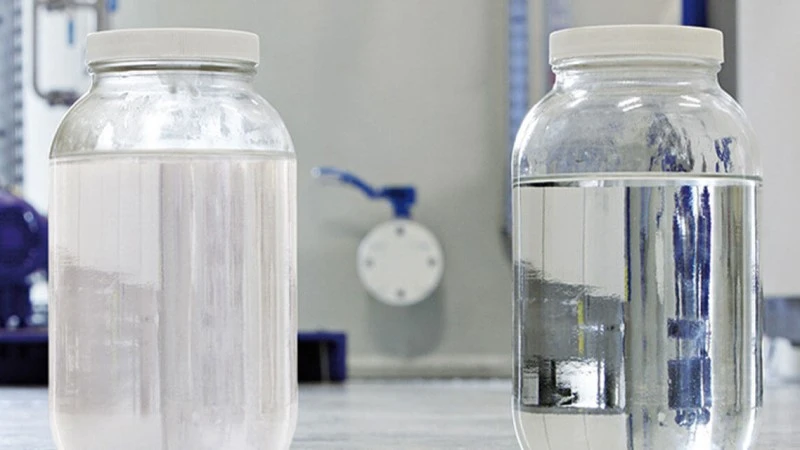
Where other processes with a lot of equipment and operating costs barely meet the legal discharge limits, the Clearcat condensation stage impresses with the quality of the treated wastewater.
It is crystal clear and practically oil-free.
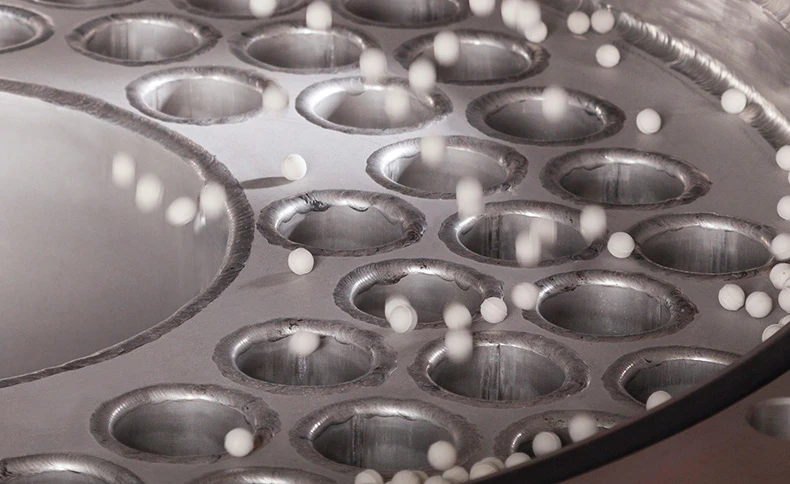
Thanks to smallceramic grinding balls in the heat exchanger, salt deposits in the tubes are prevented in order to maintain good heat exchange and thus reduce energy consumption. - Further information
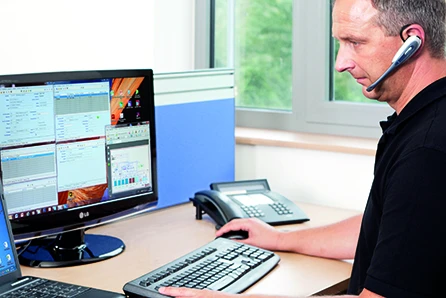
Our modern Vacutouch machine control system enables convenient remote access to your VACUDEST vacuum evaporator via the Internet. This applies not only to us, but also to your operators. This saves time and money, as 4 out of 10 faults can be rectified without on-site intervention. - Further information
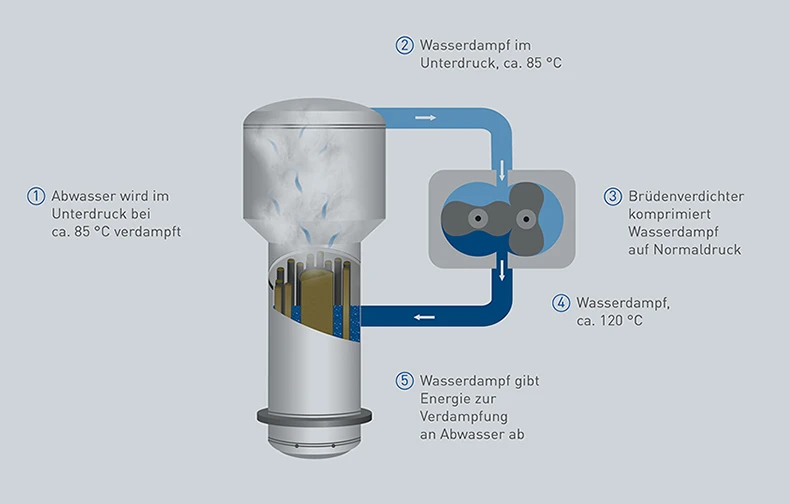
Vacuum distillation plants work on the simple principle of separating substances according to boiling point differences: The industrial wastewater is evaporated under a reduced pressure at a temperature of only about 80 degrees, instead of 100 degrees as at atmospheric pressure. All substances that have a higher boiling point than water remain in the evaporation residue. This includes heavy metals, salts, but also oils, fats or surfactants.
Because the water content is evaporated, the volume of the residue from distillation is reduced to 0.5 to 5 per cent of the original wastewater volume. The rising steam, also called vapor, is almost free of impurities. After condensation, it can be returned to the production as clean process water.

You have questions on our VACUDEST systems?
Kindly contact us!
Your contact is:
Thomas Dotterweich
Senior Sales Engineer
+49 7627 9239-306
thomasm.dotterweich@h2o-de.com
You need consumables, spare parts or a maintenance date?
We will be pleased to assist you!
Your contact is:
Carles Fité
Technical Customer Support
+49 7627 9239-888
carles.fite@h2o-de.com
You want to be part of our team and create the wastewater-free future with us?
We will tell you how!
Your contact is:
Bettina Böhringer
Human Resources
+49 7627 9239-201
career@h2o-de.com


 DE
DE  EN
EN  US
US  ES
ES  FR
FR  PL
PL